You’ve finished the music. The artwork ideas are exciting. You’re happy with the quantities you have in mind and you’re ready to get serious about making vinyl part of your next release.
If you’re new to vinyl pressing, it’s an exciting step, but also one with a few things to think about along the way. Getting the details right matters, because small mistakes can cause problems further down the line and affect your finished release.
Unlike a digital release, where an error can be put right after a new upload, a mistake on a vinyl record isn’t quite so easy to undo.
We want your vinyl release to be everything you hoped it would be. But once the records have been pressed, they’ve been pressed. This means the audio can’t be edited, the artwork can’t be changed, and the track listing can’t be updated without producing something new.
For an independent artist or label who might be self-funding the release, discovering a problem after the full run has been produced can be disappointing, frustrating, and expensive.
That’s why getting the details right before pressing begins is so important. From preparing the audio and checking the running order, to supplying the artwork correctly and taking the time to listen to your test pressing, each stage has a part to play in producing a finished record you’re happy with.
We’re not saying that pressing vinyl needs to be complicated. Far from it. But because we work through the process with artists and labels every day, we know that good preparation and careful checking mean simple but costly mistakes can be avoided.
So, before you send your release off to the press, here are some of the common mistakes worth avoiding.
-
Leaving your vinyl release until the last minute
Probably one of the easiest mistakes to make is not allowing enough time.
You’ve finished the music, the artwork is coming together, and you have a release date in mind. It’s easy to think about the physical release once everything else is finished.
But vinyl has its own production time.
Processing digital release files needs just a few working days, whereas vinyl needs several weeks. There’s audio to prepare, artwork to finalise, files to supply and approve, and several stages to work through before those finished records are sitting in front of you.
A recent guardian article highlighted just how important those timelines can be, looking at several major releases where vinyl versions differed from the final digital versions. The issue was that physical production needed to start weeks ahead of the digital release.
This can happen to any artist and any release. When time is tight, small details can be overlooked.
If you’re working towards a particular release date, give yourself enough time to prepare everything properly and deal with anything that needs changing before the full run is produced.
The earlier you start thinking about the physical release, the more breathing room you have to get it right.
If you’re planning your first pressing, our guide to planning a vinyl release without losing your mind is a useful place to start.
-
Sending audio without checking that it’s suitable for vinyl
One of the questions we’re often asked is whether the same master used for streaming can be sent for vinyl.
Vinyl is a physical format, and the music needs to be prepared with the cutting and pressing process in mind. Playing time, track placement and the characteristics of the music can all have a bearing on how it translates to the finished record.
This doesn’t mean you need to become a vinyl mastering expert.
Your mastering engineer can advise you on what’s required for your release. If you don’t already have someone handling the vinyl master, we’re able to recommend mastering engineers who understand the requirements of the format.
The important thing is to raise any questions you might have before your final audio is submitted. It’s much easier to address a potential issue before production starts than after the records have been pressed.
-
Not checking the running order
The running order might seem like a small detail, but once it’s on vinyl, it becomes part of the physical record, so check, and check again that:
The correct song is on side A
The track sequence is exactly as intended.
You haven’t accidentally supplied an older version of the track.
The playing time works for the side it’s been allocated.
When you’ve been working on a release for months, with multiple versions of audio files, artwork and track listings, mistakes can happen.
Before submitting your files, double-check the running order against your final artwork and track listing.
And ideally have someone else check it too. A second pair of eyes can spot something you might have become too familiar with to notice.
-
Skipping the test pressing
If you’re trying to keep the cost of a vinyl release down, it’s easy to look at test pressings and think: Do I really need that?
You already know the music. You’ve checked the master. You’ve approved the artwork. Surely, you’re ready to go.
But test pressings give you the opportunity to hear your music as a physical record before the main pressing is produced. For an independent artist or small label, that matters.
Especially if you’re funding the release yourself, the impact of discovering something at the test pressing stage would be very different from discovering it after the full run has been produced.
This is the point where we’d always encourage you to slow down. Don’t just play the test record for five minutes and decide it sounds fine. Listen to both sides properly. Listen more than once. If there are other people involved in the release, ask them to listen too.
And listen somewhere familiar if you can. You know your music better than anyone, so you’re likely to be the best person to notice when something doesn’t sound quite as expected.
If you do hear something that concerns you, raise it before the main pressing goes ahead.
We’ve written more about what test pressings are and why they matter, but the basic principle is to use the test pressing as an opportunity to check the physical record before committing to the full run.

-
Treating vinyl artwork like any other digital artwork
Artwork is one of those things that can look finished on your screen but still needs attention before it goes into production.
A vinyl sleeve has physical dimensions, folds, spines, bleed areas and other requirements that don’t exist when designing artwork for a digital release.
Colour settings, templates, image resolution and dimensions all matter too.
We see this regularly with artists pressing for the first time. It’s easy to concentrate on creating something that looks great and only think about the production specifications afterwards. But it’s much better to get the specifications first and design to them.
Remember that your artwork will be printed, cut, folded and assembled. What looks perfect on your monitor needs to work just as well when it becomes a physical sleeve.
If you’re creating something more elaborate than a standard sleeve, there can be even more to consider.
Our guide to designing custom vinyl that fans want to own is worth a read before you get too far into the design process.
And if you’re unsure about anything, ask. It’s much easier to clarify a specification before artwork is finished than to discover afterwards that something needs to be changed.
-
Forgetting what goes into the packaging
The main sleeve tends to get most of the attention. Understandably. It’s the bit everyone sees.
But there can be a lot more to your physical release than the outer sleeve.
Depending on the format and packaging you’ve chosen, you may have labels, inner sleeves, download cards, stickers, gatefolds, or other elements.
Each can have its own requirements, and it’s surprisingly easy to concentrate on the main artwork and forget about something else until much later.
Before you get started, make a simple checklist:
- What exactly is going into the package?
- Which elements need artwork?
- What needs to be supplied, and when?
- Do you need additional printed material?
Having everything written down sounds basic, but it can save a lot of last-minute head-scratching.
-
Not checking the small details
Maybe not as exciting as choosing vinyl colour or approving your sleeve artwork, but the smaller details matter. These include:
- Catalogue numbers
- Track titles
- Credits
- Copyright information
- Names
- Website addresses
- Dates
These are all things that can be easy to get wrong, particularly when you’ve looked at the same artwork dozens of times.
Read every piece of text carefully before approval, without relying entirely on spellcheck. It may tell you that a word is spelled incorrectly, but it can’t tell you that you’ve used the wrong catalogue number or credited the wrong person.
Our best advice is to read the final artwork as if you’ve never seen it before. Look at it with fresh eyes, and if possible, get someone else to proof it too.
Once a mistake is printed on hundreds of sleeves, it can’t be edited like a digital version can.
-
Ordering more records than you can realistically sell
There’s something exciting about seeing your music become a physical product. So, it’s understandable that, when you’re placing your first order, the temptation is to think: If I’m doing this, I may as well press loads.
But vinyl is an investment, particularly when you’re funding it yourself. Rather than asking how many records you could sell, ask how many you can realistically sell, store and afford to have tied up in stock.
Think about your audience, previous sales, upcoming gigs, online orders, pre-orders and how you intend to sell the records. Will most sales come through your website? Bandcamp? Live shows? Independent record shops? A label?
There isn’t one magic quantity that works for every release. A larger pressing run can reduce the cost per record, but that saving doesn’t look quite so attractive if you end up with hundreds of unsold records taking up space for years.
If you’re trying to work out the right number for your release, take a look at our guide to how many records you should press.
And if you’re looking at a smaller quantity, short run vinyl pressing can be worth considering.
-
Forgetting where the records are going to go.
The moment any artist will look forward to is the finished records arriving. Then the reality kicks in. Hundreds of records take up considerably more space than you might imagine.
Before placing your order, think about where those records are going to go.
Will you keep them at home?
Do you have a suitable storage space?
Will you take stock to gigs?
Are you going to send individual orders yourself?
Will you supply record shops?
Or would it make more sense to use a fulfilment service?
This is something worth thinking about before the records arrive, rather than when boxes are already filling up your spare room.
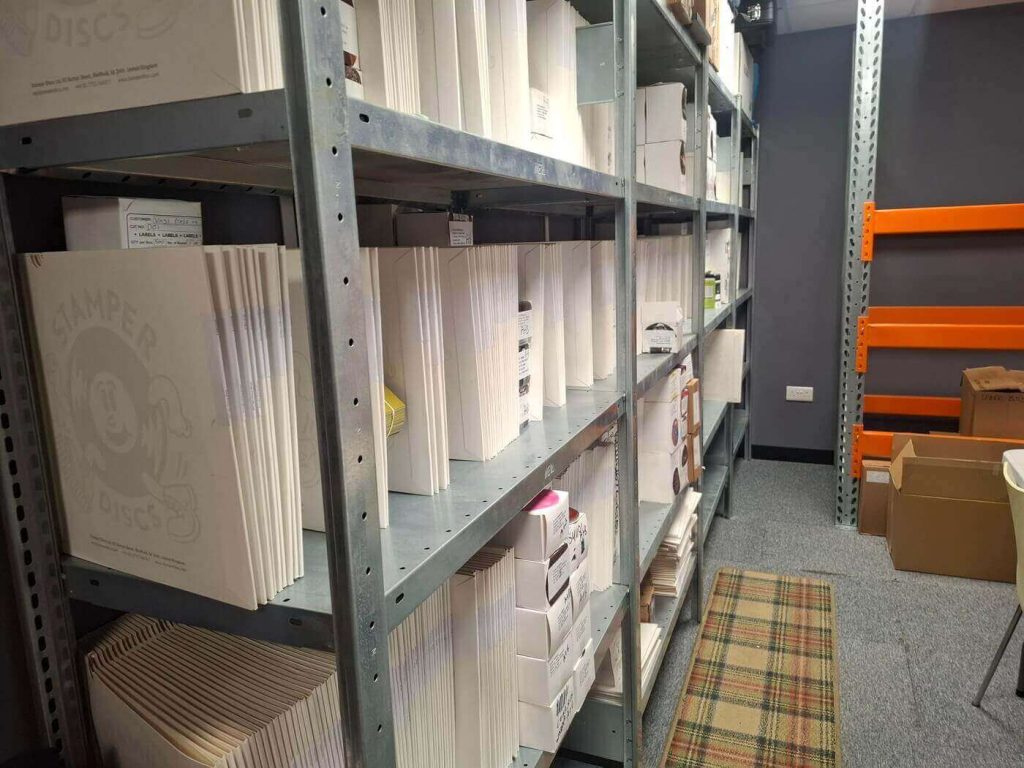
At VPUK, we offer storage and fulfilment, so finished records can be stored with us and orders distributed as they come in. For independent artists and smaller labels without dedicated storage or fulfilment facilities, this can take another practical job off your list.
You’ll know your records will be pressed, and where they’ll go after production.
-
Assuming the vinyl will sound exactly like the digital version
Vinyl is an analogue physical format. It isn’t a digital file transferred onto a disc.
The finished record may sound different from the digital version you’ve been listening to, and that’s part of the nature of the format.
The aim isn’t to make vinyl sound exactly like your digital master. The aim is to produce a record that works for the format and sounds the way you want it to.
That’s another reason why the preparation of the audio matters, and why the test pressing is so useful. You’re not just checking that the record plays. You’re getting the opportunity to hear how the music has translated to the physical format.
If you have concerns about how your music will translate to vinyl, talk to your mastering engineer and pressing plant before production.
At VPUK, we don’t do mastering ourselves, but if you don’t have one, we can put you in touch with mastering engineers who understand vinyl and can help you get your audio prepared appropriately.
-
Not asking questions
The easiest mistake to avoid is probably the simplest: not asking when you’re unsure.
If this is your first vinyl release, there’s no reason for you to know every technical detail of the process.
You’re the artist. Your job is to make the music. You don’t need to become a vinyl manufacturing expert just to release it on vinyl.
If you’re unsure about an audio file, artwork specification, format, quantity, packaging or anything else, ask before moving forward.
A good pressing partner should be able to explain what they need from you, answer your questions and flag anything that needs attention.
Asking a question early is always better than discovering an issue later.
And if you’re pressing vinyl for the first time, don’t worry about asking something you think you should already know. There really is no such thing as a silly question when it’s your music, your money and your release.
Getting Your Vinyl Release Right
Pressing on vinyl doesn’t have to be complicated. It just requires a little more planning than releasing music digitally.
The good news is that most of the problems we’ve covered here are avoidable.
Give yourself enough time. Check your audio and running order. Use the correct artwork specifications. Proofread everything. Think carefully about quality and storage. And, importantly, take time to listen to your test pressing before the main run is produced.
Most of all, choose a pressing partner you can talk to.
You shouldn’t feel like you’re simply sending files into a production system and hoping everything comes back right. There should be someone you can ask when you’re unsure, someone who understands the process and someone who wants to help you get the finished record right.
That’s how we approach things at Vinyl Press UK
We work with artists and independent labels through the pressing process, helping with the practical details along the way, from preparing your release for production to getting the finished record into your hands.
Your record is more than a product coming off the press. It’s your music, your artwork, your investment and, quite possibly, something you’ve been working towards for a very long time.
So, give us a call, and let’s talk about your release. Reach our team direct on 07585 039 156 or email info@vinylpressuk.com

Frequently Asked Questions (FAQs)
How early should I start planning a vinyl release?
As early as possible, particularly if you’re working towards a specific release date. This gives you time to prepare your audio and artwork, check everything properly and allow for the different stages of production.
Do I need a special master for vinyl?
Your vinyl release should be prepared with the physical characteristics of vinyl in mind. Speak to your mastering engineer and pressing plant about the requirements for your release before submitting your final audio.
If you don’t have a mastering engineer, VPUK can recommend engineers who understand the requirements of vinyl.
Should I get a test pressing?
We strongly advise that you include a test pressing is part of your project, it’s well worth taking the time to listen to it properly before the main pressing goes ahead.
It gives you the opportunity to hear the physical record and raise any concerns before the full run is produced.
How many records should I press?
There isn’t one right quantity for every artist.
Consider your audience, previous sales, how you plan to sell the records, your budget and how much stock you can realistically store.
Our guide to choosing the right vinyl pressing quantity goes into this in more detail.
Can I change my artwork after submitting it?
Once approved and submitted, your project will enter a production process. Changes are much easier to make before this begins, so check everything carefully before giving final approval.
What happens if I make a mistake on my vinyl?
It depends on the type of mistake and when it was discovered.
This is why careful checking before production and listening to a test pressing are so important. Finding an issue early gives you more opportunity to address it before the main pressing is produced.
I’ve never pressed vinyl before. Can you help me through the process?
Absolutely. If you’re new to vinyl pressing, it’s completely reasonable to have questions about audio, artwork, format, quantities, and the production process.
At VPUK, we work with artists and independent labels and can talk you through the practical steps involved in getting your release ready for pressing.
If you’re ready to start planning your release, get in touch and let’s talk through what you need. Call us on 07585 039 156 or email info@vinylpressuk.com