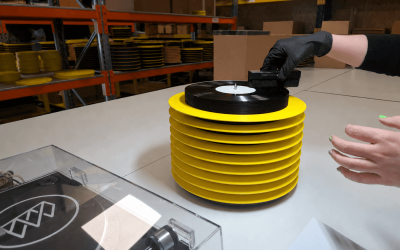
Then Vs Now. How Vinyl Records are Made Today
Its official, vinyl is back and booming. Once relegated to dusty shelves, the humble record has reclaimed its place at the heart of music culture. For collectors and audiophiles, indie artists and even major labels, the love for vinyl is louder than ever.
But with this revival comes curiosity. Is vinyl made the same way it was in the heyday of the 1970s? Or has the pressing process evolved with the times?
At Vinyl Press UK (VPUK), we specialise in modern vinyl production with a deep respect for the craft’s legacy. So how was vinyl made back in its golden era? And how is it done today? And has much changed?
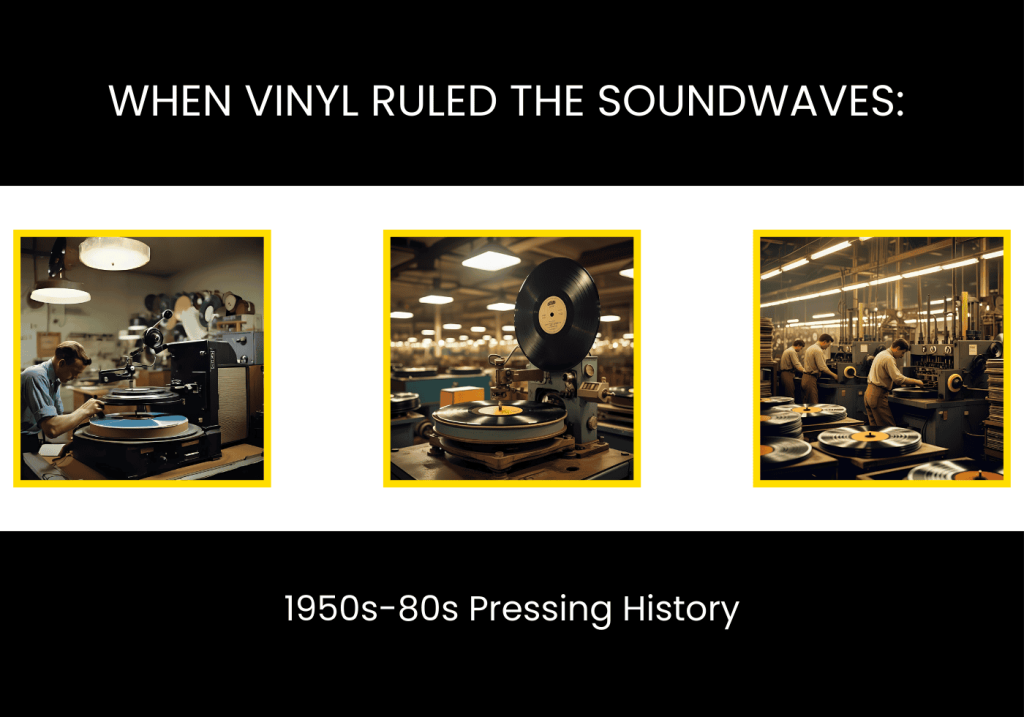
When Vinyl Ruled the Soundwaves: 1950s-80s Pressing History
Vinyl records are named after their main ingredient: polyvinyl chloride, commonly shortened to PVC. They held the top spot for music listening from the 1950s through to the 1980s with large pressing plants producing tens of thousands of records daily, using heavily mechanical, standardised processes optimised for scale.
The traditional process looked like this:
- Mastering – Audio was transferred from magnetic tape to a lacquer disc using a lathe, often in real time. This was a highly skilled and delicate process.
- Electroplating & Stamper Creation – The lacquer was coated in silver and nickel to create a negative metal ‘father’. From this, positive ‘mothers’ and final ‘stampers’ (negative again) were formed.
- Pressing – Vinyl ‘pucks’ were baked with centre labels, then squashed between two stampers inside a hydraulic press, heated to around 160-180 degrees.
- Trimming & Inspection – The newly pressed records were trimmed, cooled, and manually inspected.
It was a marvel of industrial manufacturing, but it wasn’t built for flexibility or small-scale projects. By the late 1980s, vinyl was largely overtaken by CDs and digital formats. Many pressing plants closed, and the knowledge was almost lost.
Needle Drops Again: Vinyl’s Reappearance in the 2000s and Beyond
Today, vinyl has spun its way back into mainstream popularity. According to the BPI, 5.9 million units were sold in 2023, and this was following a 2.9% improvement the year before, proof that records are more than a nostalgic fad. But was it a case of dusting off vintage equipment and doing things in the same way?
Not quite. The fundamentals of pressing using stampers, applying heat, and imprinting grooves are still in place. But thanks to modern tech, quality control, and production flexibility, some aspects of the process have evolved.
So… What’s Changed in Vinyl Pressing?
In many ways, not much. The core process of vinyl pressing remans largely the same as it was decades ago. But that doesn’t mean it’s stood still. There have been key improvements over the years that have enhanced the overall quality and efficiency of the process.
- Digital Mastering (but analogue lives on)
Back in the day, all masters were analogue. Today, most are cut from digital files like high-res WAVs. This allows for precision and flexibility, without sacrificing sound.
At VPUK, we work with experienced engineers who craft vinyl-specific masters, whether from tape or digital. While some audiophiles still seek the full analogue (AAA) path, digital mastering, when done right, sounds brilliant on wax.
- Improved Pressing Equipment
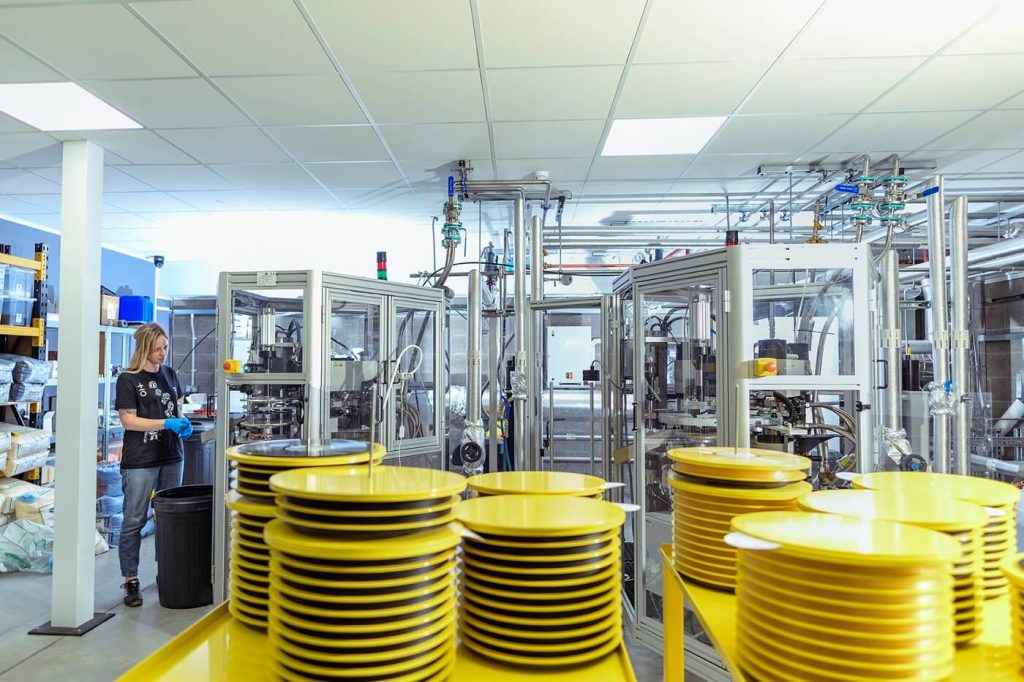
A key change in recent years is the pressing machines themselves. While some old machines from the 70s are sill in operation (refurbished and modernised), many pressing plants, including ours, use new-generation hydraulic presses built for todays demands.
Modern presses offer:
- Tighter temperature control – which means fewer flaws like warping or non-fill
- Automation – improving consistency across runs
- Better energy efficiency – making the process more sustainable.
Even on short runs, our investment in advanced pressing technology ensures consistent quality. This is a huge shift from the past, where high volume was the major focus, with not much thought for shorter runs.
- Faster Turnarounds & Smaller Runs
A batch of less than a thousand wasn’t really a thing back then. It was too expensive and too inefficient. Today, small batch runs are the norm, especially for indie artists. At VPUK, we can press as few as 100 records, which means more flexibility for unsigned bands, experimental labels, or first-time releases.
The modern process is leaner, faster, and more responsive. It simply means you don’t need the backing of a major label to press high-quality record anymore.
- More Colours, Better Sound
Black vinyl was standard back in the old days. Colour variants existed, but they were rare and often less stable.
Colour pressing has since exploded. Today’s options include everything from translucent pink to eco-mix vinyl (made from recycled cut-offs), and holographic finishes. Whilst more widespread, coloured vinyl still stands out and captivates collectors. Sound-wise, black vinyl has always had a slight edge, but today, coloured vinyl can provide excellent sound quality after careful pressing.
At VPUK, we press a wide variety of colours and special effects yet balance aesthetics with audio quality every time.

- Modern Quality Control (QC)
In the past, quality control relied entirely on trained eyes and ears, a traditional method which is still used today. But digital tools are also used to ensure precision and consistency.
Our QC methods include:
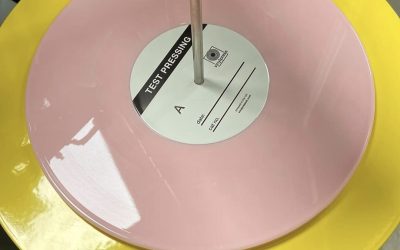
- Test Pressing
- Visual inspections
- Weight and thickness checks
- Temperature and pressure monitoring
- Audio quality control
- Label and packaging inspections
A blend of classic craftsmanship and new technology offers the best of both worlds.
- Eco-Conscious Production
The focus in the 70s wasn’t sustainability, but it matters today.
We’re always looking for ways to reduce waste and increase efficiency, whether through recyclable packaging, careful material handling, or energy-conscious pressing methods. The vinyl of today doesn’t just sound good, it feels good too.
What’s Stayed the Same?
Regardless of tech upgrades and productivity boosting systems, there’s something beautifully old-school that still lives on in every record:
- Its still a physical, analogue sound medium
- It still involves metal stampers, hydraulic presses, and heated PVC
- Each record is still an individual project, not a carbon copy
No matter how much tech evolves, the soul of vinyl remains warm, tactile, and wonderfully real.
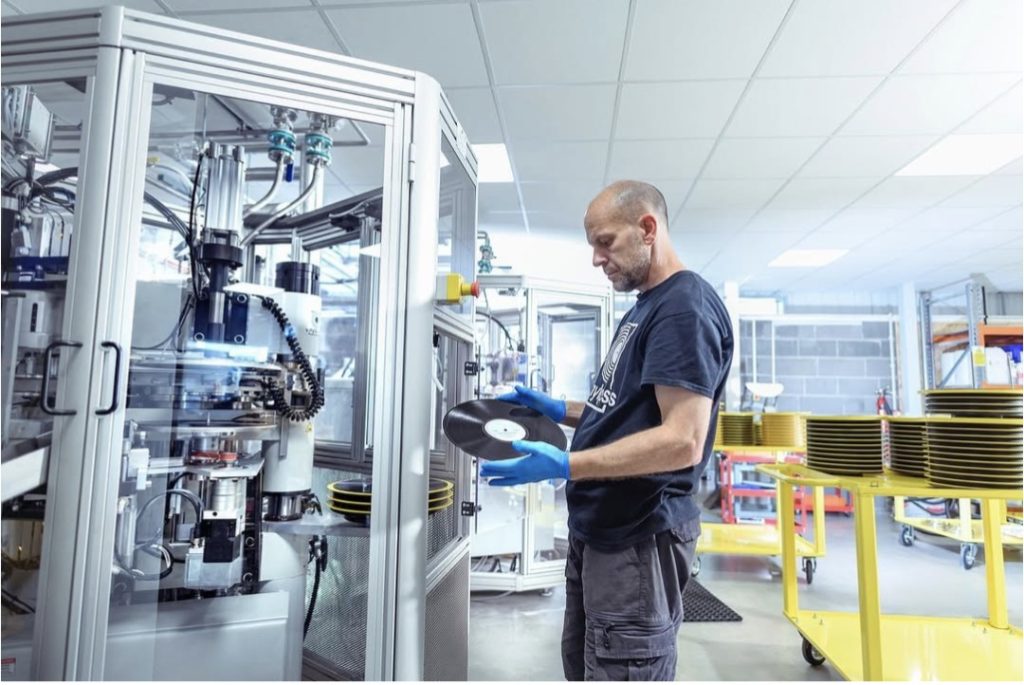
The Best of Both Worlds: Vintage Feel, Modern Precision
Any changes to the vinyl pressing process since the industry’s heyday, are certainly for the better. From new equipment and eco-conscious practices to the ability to press small runs for indie artists, today’s vinyl world is more accessible, flexible and consistent.
At Vinyl Press UK, we blend modern precision with old-school care. Whether you’re pressing your first 100 copies or prepping a limited-edition run with special effects, we’re here to help bring your music to life, on wax. We specialise in 12-inch LPs, 7-inch singles and 10-inch records, all crafted to sound as good as they look.
Long live vinyl.
FAQs: The Vinyl Pressing Process, Then and Now
Q: Is vinyl pressing still done the same way it was in the 1970s?
A: The basic principles are the same. Stampers, hot vinyl, hydraulic presses, but the technology has advanced dramatically. Today’s presses are more consistent, efficient, and eco-friendly.
Q: Do digital files work for vinyl?
A: Yes! Most modern records are cut from digital masters, and when properly prepared for vinyl, they sound fantastic.
Q: What is the minimum number of records I can press?
A: At Vinyl Press UK, we specialise in small batch runs, with a minimum order of just 100 units.
Q: Is coloured vinyl lower quality than black
A: Black vinyl tends to offer the best fidelity, but modern coloured vinyl has come a long way. With expert pressing coloured vinyl sounds excellent.
Q: Are new pressing machines better than the vintage ones?
A: In many ways, yes. New presses offer better temperature control, automation, and consistency, all crucial to any project, including short runs.
Ready to Press?
We’d love to help bring your music to life. Call us, email us, or start your online quote today!
Call: 07585 039 156
Email: info@vinylpressuk.com